A practical nutrition guide to stabilise blood sugar, sharpen focus, and eat well without counting anything.
VA
Vela Anand
Founding Editor · 5 parts · 35 min read
This isn't a diet. It's a small set of rules for building meals that give you steady energy, no 3 p.m. crash, no cravings by 9 p.m., no calorie counting. Learn the plate, then forget the numbers.
What you'll walk away with
Build any meal from a simple protein-fibre-fat template
Stop the mid-afternoon energy crash for good
Cut cravings without willpower
Eat out and travel without falling off track
Chapters
5 parts
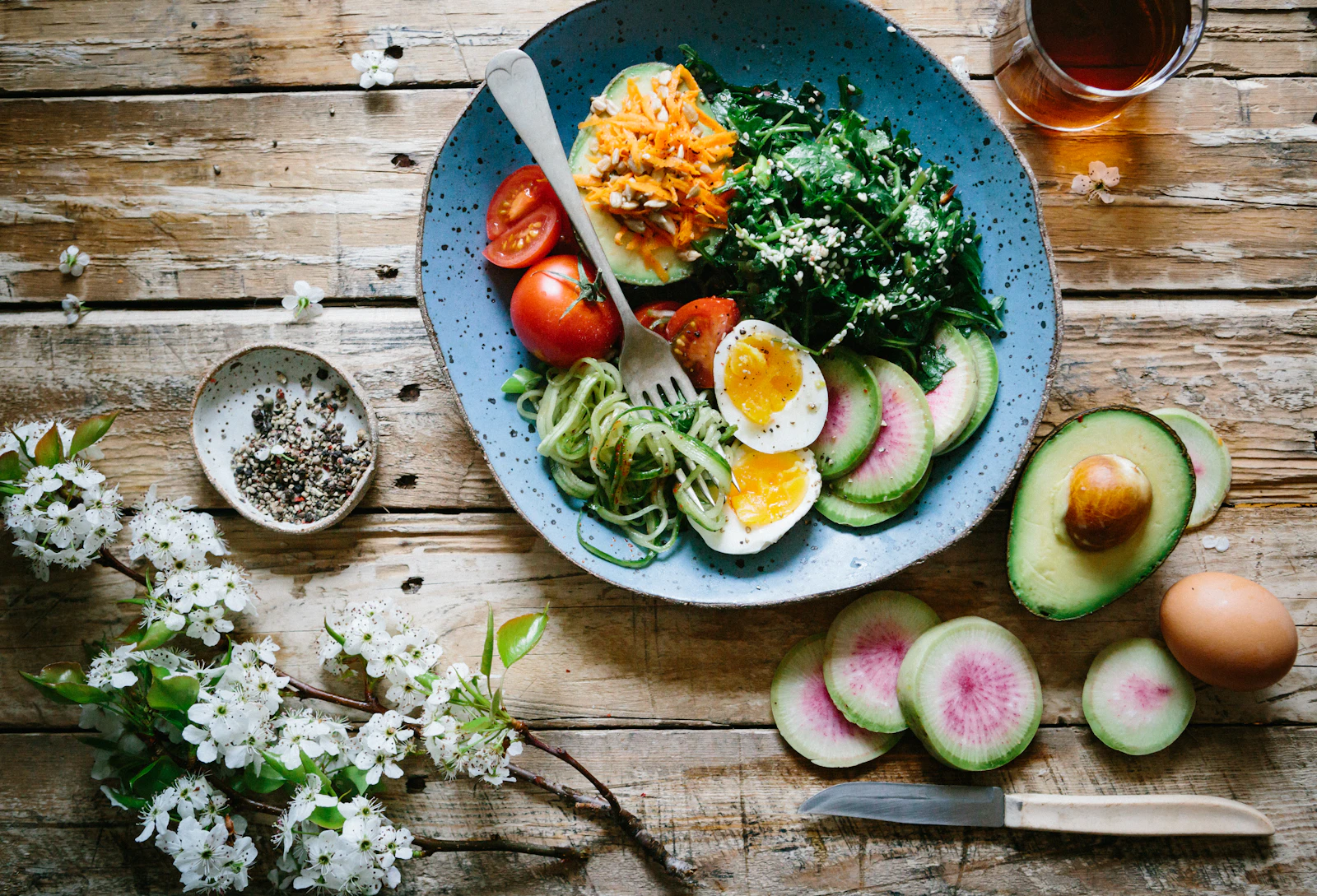
Every meal, aim for the same rough shape on the plate: a palm of protein, two cupped hands of vegetables or fruit, a thumb of fat, and, if you're active, a fist of smart carbs. That's it. No scale, no tracking app, no macro spreadsheet. The plate self-adjusts to your body because your hand scales with you.
Protein, vegetables, a smart carb, a thumb of fat. Same shape every meal.
The hand-portion template
Protein, one palm (roughly the size and thickness of your palm, not fingers).
Vegetables or fruit, two cupped hands.
Fat, one thumb (oil, butter, nut butter, cheese, half an avocado).
Smart carbs, one fist, only on active days or after a workout.
This template works because it hits the three levers that stabilise energy at once: protein for satiety and steady blood sugar, fibre (from veg and fruit) for slow digestion, and fat for lasting fullness. Miss any one and the meal collapses into a blood-sugar spike-and-crash within two hours.
For active people, the carbs go up. If you lifted or ran that day, add a fist of rice, potato, oats, or pasta, your muscles are primed to store it as glycogen instead of fat. On a low-activity day, the carb fist can shrink or drop entirely without leaving you hungry, as long as the protein and fat portions stay solid.
A common mistake: making the vegetables an afterthought. Two cupped hands is a lot. It should visibly dominate the plate. If your veg is a garnish and the pasta is the main event, you'll be hungry in 90 minutes no matter how big the portion was.
Don't overthink 'smart' vs 'not smart' vegetables. Frozen counts. Canned counts. A bagged salad counts. The best vegetable is the one you'll actually eat five days a week, variety matters less than frequency at this stage.
Dressings, sauces, and oils fall under the 'fat' slot. A thumb of olive oil on a salad, half an avocado, a small handful of nuts, a slice of cheese. Don't fear it, fat is the difference between a meal that satisfies for four hours and one that leaves you snacking by 3 p.m.
Try the plate for three days without changing anything else about your day and notice the difference in afternoon energy and evening cravings. Most people report both dropping noticeably by day three.
Target: 0.7–1 gram of protein per pound of goal bodyweight, per day. For most people that's 100–150 g, spread across 3–4 meals of at least 25–30 g each. This one number does more for body composition, satiety, and energy than any other nutrition variable you can change.
A palm of protein at every meal. That's the whole daily target, spread out.
Why goal bodyweight and not current? If you're carrying extra fat, you don't need to feed it protein, you need to feed the lean mass you want to have. If you weigh 220 lb but want to be a lean 180, aim for 180 g of protein, not 220.
Easy sources with real counts
Eggs, 6 g each (a 3-egg breakfast is only 18 g, not enough on its own).
Greek yogurt, 15–20 g per cup.
Chicken or fish, 25–30 g per palm-sized serving.
Cottage cheese, 25 g per cup.
Tofu or tempeh, 20 g per serving.
Whey or casein powder, 20–25 g per scoop.
The dinner-only protein pattern is the most common failure mode. Even if you eat a huge steak at 7 p.m., you've spent all day under-fed on the one nutrient that regulates hunger. Fixing this doesn't require more food, just moving some to earlier in the day.
Plant-based? Achievable, just deliberate. Tofu, tempeh, seitan, edamame, lentils, chickpeas, and pea-protein powder do the heavy lifting. Most plant sources are lower in protein per calorie than animal sources, so plan for more volume, a cup of lentils is about 18 g protein, so it's a component of a meal, not the whole thing.
One caveat: too much protein in one sitting is fine (your body handles it) but often crowds out fibre and fat. Aim for 30–50 g per meal, not 80. Distribution across the day matters more than any single meal being huge.
Carbs aren't the enemy. Bad carbs at bad times are. Smart carbs are whole, minimally processed, and slow to digest, and they deserve a full place on your plate, especially if you exercise. Spike-y carbs are refined, low in fibre, and often paired with sugar, and they're the ones behind most 3 p.m. crashes.
Smart carbs (default these)
Oats (steel-cut or rolled, not the flavoured single-serve packets).
Rice, white or brown, both fine.
Potatoes and sweet potatoes.
Quinoa, beans, lentils.
Whole fruit, especially berries and apples.
Whole-grain bread with visible seeds; whole-grain pasta.
Spike-y carbs (occasional, not daily)
Sugary drinks, including fruit juice.
Most breakfast cereals and pastries.
White bread and white bagels on their own.
Most granola bars (check the sugar column).
Anything labelled 'low-fat' that used to contain fat.
Most chain-store 'healthy' smoothies, which are essentially milkshakes.
Timing helps enormously. Put your biggest carb serving after your hardest workout or the day's longest walk. Your muscles are primed to soak them up as glycogen instead of storing them as fat, and the same carbs feel dramatically different in your body at 5 p.m. after a lift vs. 10 a.m. on the couch.
The fructose question. Whole fruit is fine, the fibre slows the sugar down and it comes packaged with vitamins. Fruit juice and dried fruit are essentially candy: same sugar, no fibre. If you're drinking a glass of orange juice with breakfast every day and wondering why you crash at 11 a.m., that's why.
Pair carbs with protein and fat, always. A plain baked potato spikes glucose sharply; a baked potato with chicken and olive oil doesn't. This is the single easiest way to eat the foods you like without the energy consequences.
"You don't have a carb problem. You have a naked-carb problem. Dress them up with protein and fat and most of the trouble goes away."
Low-carb isn't required. Some people feel great on lower carbs; others feel miserable. If you sleep well and you have steady energy on 150 g of carbs a day, there is no health reason to cut them further. The plate template works across a wide range of carb intakes.
Rule: every snack has protein AND fibre. Apple with peanut butter. Cheese with crackers. Yogurt with berries. Hummus with carrots. Turkey slices with a piece of fruit. Not just a granola bar, not just a handful of nuts, not just a piece of fruit on its own.
Protein and fibre in every snack. That single rule kills the 3 p.m. crash.
The pairing keeps blood sugar flat, which keeps hunger flat, which kills the 3 p.m. crash-and-crave cycle almost entirely. A single-nutrient snack (just carbs, just fat) spikes something in isolation and drops it again 45 minutes later, that's the drop you feel as hunger.
If you're snacking more than twice a day, your meals are too small. Add protein and fat to breakfast and lunch and the snack problem usually solves itself within a week. Snacks should be optional bridge food, not the backbone of your eating.
The evening craving. Almost always about wind-down, not food. Try tea, gum, a shower, or brushing your teeth as a signal that eating is done for the day. If you're genuinely hungry at 9 p.m., dinner was too small, fix dinner tomorrow, don't 'snack better' tonight.
The desk-drawer emergency kit
Beef or turkey jerky (single-serve packs).
Canned tuna or salmon with a plastic fork.
String cheese or single-serve cottage cheese cups.
Hard-boiled eggs, prepped for the week.
Whey protein sachets, one shaker bottle at your desk.
The 'I earned this' trap. Snacks aren't rewards. Building your day around 'I did X so I get to eat Y' turns food into an emotional transaction, and you'll always lose that math long-term. Eat because you're hungry, stop because you're satisfied, and let workouts be about training, not calorie accounting.
The plate has to survive the real world or it doesn't matter. Below are the actual scripts for the situations where most nutrition plans quietly fall apart: restaurants, travel, busy weeks, and social events.
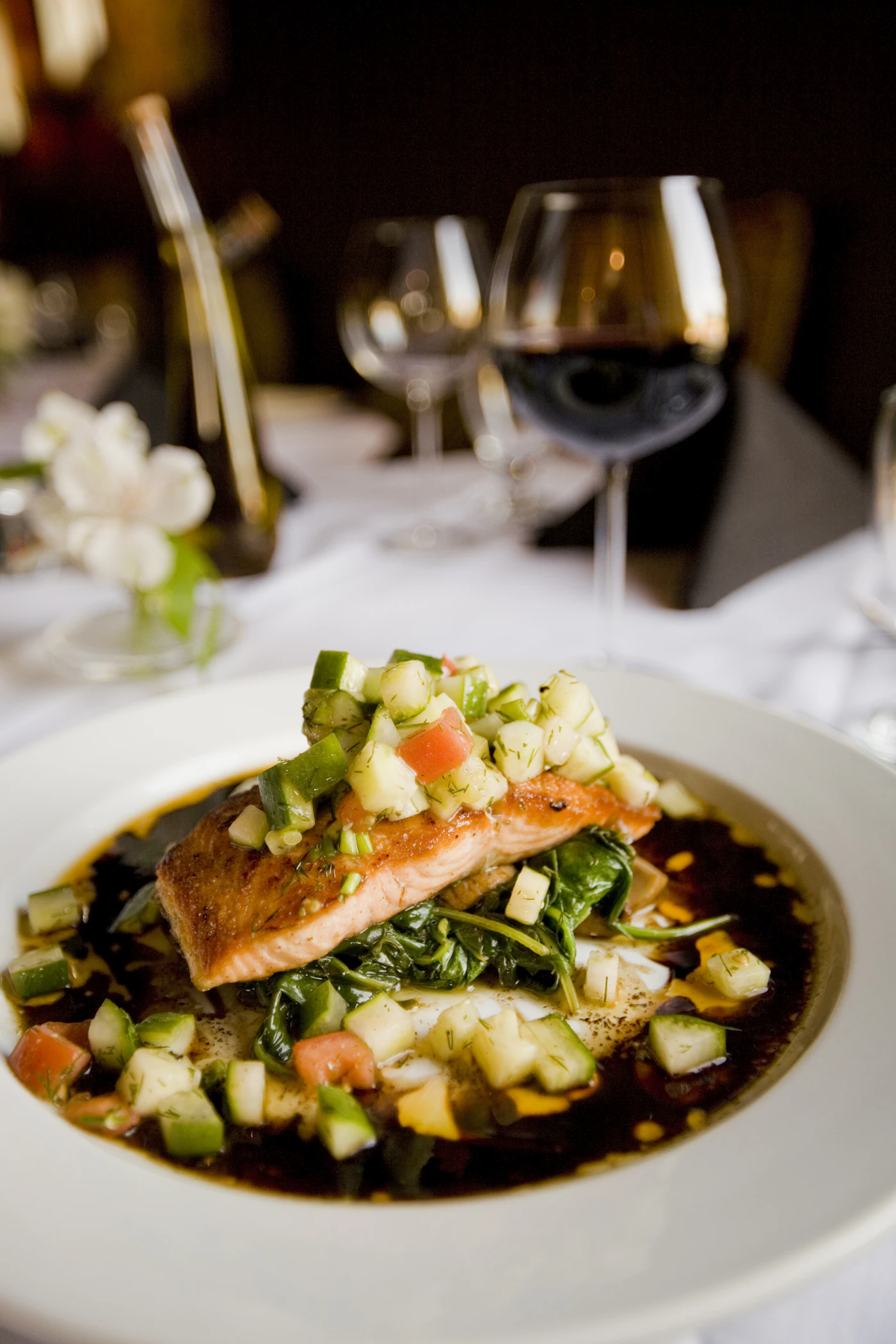
Order a protein, order vegetables, share the carb. Almost every menu has a version of this if you look.
The restaurant script
Grilled fish, side of vegetables, share the fries.
Steak, side salad, split the mashed potatoes.
Chicken bowl, extra veg, half the rice.
Pasta night: order a protein-topped pasta and a large side salad, don't skip the salad.
Travel, airport eating. Most airports now have decent options if you look past the pretzel stands: rotisserie chicken, Greek yogurt cups, jerky, hard-boiled eggs, cheese and fruit boxes, sushi. The old excuse of 'there's nothing to eat at the airport' hasn't been true for a decade. Scan for protein before you scan for convenience.
Travel, hotel breakfasts. The breakfast buffet is a goldmine when you know what to look for: eggs, smoked salmon, yogurt, cottage cheese, fresh fruit, oatmeal. Skip the pastries, waffles, and juice by default. Two eggs, yogurt with berries, and a coffee is a 30 g protein breakfast anywhere in the world.
Busy weeks, the three-meal rotation. Pick three dinners you can cook on autopilot and rotate them all week. Boring food you eat beats interesting food you skip. My personal three: a sheet-pan chicken and vegetables, a stir-fry with rice, and a simple pasta with a protein and salad. Total mental overhead: zero.
Meal prep, kept simple. You don't need seven identical containers. Cook one protein in bulk (a whole roast chicken, a pound of ground beef, a batch of baked tofu) and pair it with different veg and grains through the week. Two hours on Sunday saves 45 minutes every weeknight.
Social events. Alcohol is the biggest lever, not food. Two drinks with dinner is very different from six. Eat before you drink, drink water between rounds, and know your stop point before you start. Most 'I fell off the wagon' weeks are actually 'I drank too much on Friday and the next three days were damage control'.
"Weekly consistency beats daily perfection. Five solid days out of seven is the whole game."
One last principle: the goal is a way of eating you'd genuinely be happy with a decade from now. If any part of what you're doing feels like a temporary sprint you can't wait to end, it won't stick. Adjust the plate until it feels like something you can live with, because you're going to live with it.
Frequently asked
Quick answers to the questions readers ask us most about this guide.
No. The plate template, a palm of protein, half a plate of vegetables, a thumb of fat, an optional cupped hand of complex carbs, self-regulates portions for most people without any tracking. If you're not making progress after 4-6 weeks of consistency, then a brief tracking phase can help you see where the plate is drifting, but it's a diagnostic, not a lifestyle.
Neither. It's protein-forward and blood-sugar-aware, which means carbs are welcome, especially around workouts and physical activity, as long as they come with fiber, protein, and fat. Some people feel best on 100g of carbs a day, others on 300g. The template works across that whole range.
For most adults, 0.7-1g per pound of goal bodyweight per day, split across 3-4 meals of at least 25-30g each. That's the range where satiety, muscle maintenance, and body composition all track well in the research. Older adults and people training hard should aim toward the top of that range.
The template works identically. Lean on tofu, tempeh, seitan, edamame, lentils, chickpeas, Greek yogurt (if vegetarian), and a pea or soy protein powder to hit the 25-30g-per-meal target. Plant sources are lower protein per calorie, so plan for slightly larger portions and add a scoop of protein to breakfast and any snack.
Most people feel steadier afternoon energy within 5-7 days of hitting protein and fiber at every meal. Cravings usually fade within 2-3 weeks. Body composition changes are visible at 6-8 weeks. Sleep and mood improvements often show up before anything on the scale does.
Coffee, yes. Ideally before noon and with food, not on an empty stomach. Alcohol is the biggest hidden lever for energy and sleep quality; two drinks with dinner is very different from four, and the frequency matters as much as the amount. Track how you feel the next day and let that guide the dose.
Ninety-five percent of adults don't hit the daily fiber target, and the downstream consequences show up as gut issues, blood sugar spikes, low energy, and stubborn weight. Here's what fiber actually does and how to hit 30+ grams a day without effort.
Stress isn't a personality trait, it's a physiological state you can measure and change. Here's how to actually shift out of it, on the days you need it most.




 Nutrition