 Mental Health
The Anxiety-Sleep Loop: How to Break the Cycle in Two Weeks
Poor sleep amplifies anxiety, and anxiety wrecks sleep. Here's the neuroscience behind the feedback loop and the specific protocol that interrupts it.
A 14-day protocol to fix your circadian rhythm, deepen your sleep, and help you wake up rested without relying on supplements.

Most sleep problems aren't about sleep, they're about the 16 hours before it. This guide walks you through a two-week reset that anchors your circadian rhythm, quiets a busy mind, and turns your bedroom into an environment your body wants to sleep in.
Poor sleep almost never starts in bed. It starts with three modern habits that quietly break the signals your body uses to know when it's day and when it's night: too little morning light, too much evening light, and caffeine that lingers far longer than most people realise. Fix those three inputs and most 'sleep problems' dissolve without a single supplement, app, or gadget.

Your body runs on a roughly 24-hour internal clock called the circadian rhythm. That clock is set primarily by light hitting your eyes, specifically, bright light in the morning and the absence of bright light at night. When those two signals are strong and consistent, melatonin rises at the right time, core body temperature drops on cue, and sleep happens almost automatically. When they're weak or reversed, everything else you try is fighting against biology.
Morning sunlight is the single strongest cue your circadian system has. Skip it, and your brain drifts an hour later every day, the biological version of jet lag, without leaving your city. Within a week of low-morning-light living, you'll notice it's harder to fall asleep before midnight, harder to wake before nine, and harder to feel alert until you've had two coffees. That isn't a personality trait. It's a rhythm that's been left un-set.
Bright evening light does the opposite. Overhead lights, phone screens, TVs, and even a well-lit kitchen after 9 p.m. all tell your brain it's still afternoon. Melatonin, the hormone that opens the door to sleep, refuses to rise while bright light is hitting your eyes. You end up wired at 11, exhausted at 8 the next morning, and blaming stress for something that's really a lighting problem.
Caffeine is the third disruptor and the most underestimated. It has a half-life of five to seven hours, which means a 2 p.m. coffee is still half-active at 9 p.m. You may fall asleep fine, caffeine doesn't always stop that, but the sleep stays shallow, you wake at 3 a.m., and by morning you feel like you barely slept. Alcohol works the same way in reverse: it knocks you out, then fragments the second half of the night.
Stress and screens get most of the blame, but they're usually downstream of the same problem. A brain that hasn't seen morning light and is soaked in evening light will feel anxious at bedtime, that's what a mis-timed cortisol curve feels like. Fix the light and the caffeine, and the 'racing mind at midnight' quietly goes away for most people.
"You don't have a sleep problem. You have a signalling problem. Sleep is what happens when the signals are right."
For the next two days, don't change anything. Just notice: how much daylight do you actually get before 10 a.m., when do you drink your last caffeine, and how bright is your home between dinner and bed? Write it down. That's your baseline, and it's the thing this guide is about to rebuild.
Within 30–60 minutes of waking, get outside for 10 minutes. No sunglasses, no window in between. On a bright sunny day, that's enough; on an overcast day, aim for 15–20 minutes; before sunrise or in deep winter, aim for 30 minutes or use a 10,000-lux light therapy lamp on your desk. This one habit shifts your circadian clock earlier and makes falling asleep at night dramatically easier.
Indoor lighting doesn't count. Your kitchen looks bright to you because your pupils have adapted, but a lux meter tells a different story: a well-lit indoor room is 200–500 lux, an overcast morning is 10,000+ lux, and direct sun is 50,000+. Your circadian system doesn't care what looks bright. It cares about the actual photon count, and only outdoors delivers enough of it.
The mechanism is simple. Specialised cells in the back of your eye (ipRGCs) detect bright light and send a signal directly to the master clock in your brain. That signal does two things at once: it suppresses any lingering melatonin and starts a 14–16 hour countdown to the next melatonin release. Get the signal early and strong, and you'll be sleepy at a reasonable hour that night. Miss it, and the whole schedule slides.
Pair the light with movement if you can: a short walk, some easy stretching, even just carrying your coffee outside and standing on the porch. Movement plus light is a stronger anchor than either alone, it raises core body temperature, which in the morning is exactly what you want. It's also the easiest way to make the habit stick, because 'walk for 10 minutes' is more concrete than 'get some light'.
Do this every day for the full 14 days, weekends included. The consistency is the point. Your body is learning that this is when the day starts, and once it's learned, it will start prepping for sleep 14–16 hours later on its own. Skip weekends and you're re-jet-lagging yourself every Monday.
What if you wake before sunrise? Use a light therapy lamp (10,000 lux, arm's length, 20 minutes) while you eat breakfast or answer email, then get outside when the sun is actually up. The lamp is a stopgap, not a permanent substitute, a real sky, even overcast, is still stronger and better for your mood.
What if you work night shifts or rotate? You need a more custom plan than this guide can cover, but the same principle applies: your 'morning' is whenever you want your day to start, and bright light at that time (plus darkness before your 'night') is what anchors it.
By the end of week one you should notice two things: a natural dip in energy around 9–10 p.m., and easier wake-ups without the alarm feeling like violence. Those are the signs the anchor is working.
You can't crash from full alertness into sleep in five minutes. Sleep is a gradient, cortisol falls, core temperature drops, melatonin rises, brain waves slow. That gradient takes about an hour to complete, and if you skip it, you either lie awake for 40 minutes or fall unconscious in a shallow, low-quality way that doesn't restore you.
The 60/30/10 rule is the simplest framework that works. Sixty minutes before bed, dim the overheads and switch to lamps, ideally warm, low-wattage bulbs. Thirty minutes before bed, put the phone in another room and pick up a book, take a shower, or have a slow conversation. Ten minutes before, lights out, in bed.
The bigger issue with phones isn't blue light, it's stimulation. Your brain doesn't wind down while it's still consuming novel content, and the algorithm's job is specifically to keep you engaged. 'One more episode' or 'one more scroll' isn't a willpower failure; it's the product working as designed. Physical distance from the phone is the only reliable fix.
A warm shower 60–90 minutes before bed is a legitimate hack. It raises skin temperature, which triggers your body to dump heat afterwards, which drops your core temperature, exactly the drop that triggers sleep onset. It also becomes a strong ritual cue, especially when it always sits at the same point in the routine.
Pick two or three low-friction cues and repeat them every night: same shower, same tea, same three pages of fiction, same lights-out time. Rituals work because your brain learns the sequence and starts releasing melatonin before you've even brushed your teeth. Six or seven cues sounds thorough but is fragile, one missed step derails the whole thing. Two or three is robust.
Avoid the trap of using bedtime to catch up on the day's mental admin. Planning tomorrow, replaying an argument, or 'just checking' one work message will spike cortisol and undo 45 minutes of wind-down in 90 seconds. If your brain won't stop, do a five-minute brain-dump on paper an hour before bed: everything on your mind, in bullet points, closed with 'not tonight'. It sounds silly. It works.
Reading fiction is the most reliable sedative most people never try. Non-fiction and news activate problem-solving circuits; fiction lulls them. A paperback beats a Kindle beats a tablet beats a phone. If you only read one book a year, buy a boring novel and keep it on your nightstand for exactly this.
What about meditation or breathwork? Both help, but only if you'd actually do them. A four-count inhale, six-count exhale for five minutes will drop your heart rate and quiet your nervous system faster than most sleep supplements. It costs nothing and there's no side effect. Try it on the nights you feel most wired.
Your bedroom is either helping you sleep or fighting you all night. Four dials matter, temperature, light, sound, and surface, and each one is a one-time fix that pays back every night for years.
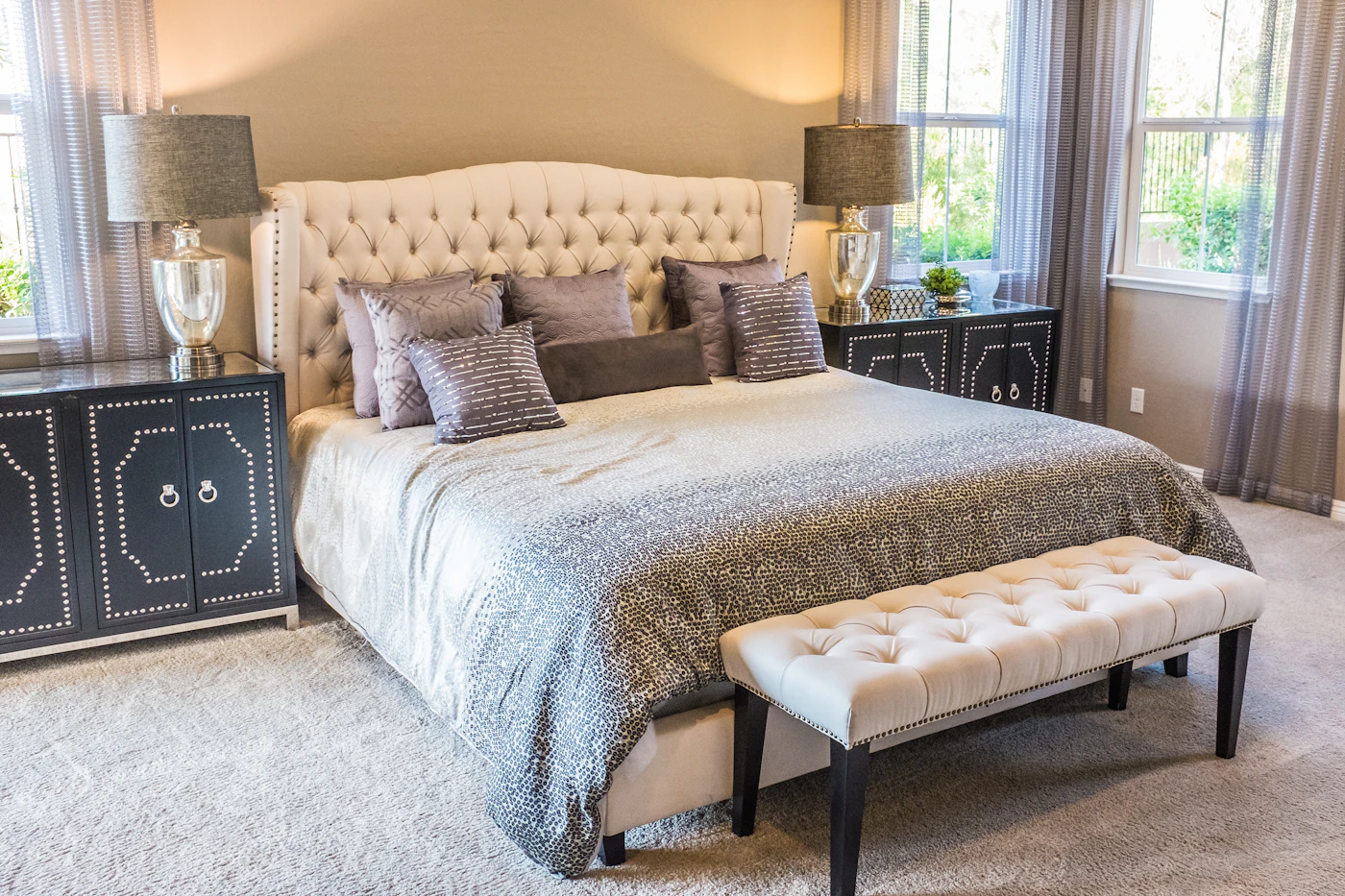
Aim for 60–67°F (16–19°C). Your core body temperature has to drop about 2°F to fall asleep, and a warm bedroom is the single most underrated cause of restless nights. If you can't control the thermostat, cool the bed instead: thinner sheets, a fan pointed at you, a chilled pillow, or one of the mattress covers with cooling tubes if you're willing to spend.
As dark as you can make it. Blackout curtains for the window, black electrical tape over any LED, phone face-down or in another room. If total darkness isn't practical (a partner needs a lamp, streetlights bleed through blinds), a comfortable sleep mask solves the entire category in one small purchase. Even small amounts of light through closed eyelids suppress melatonin and shallow your sleep.
Consistent, not silent. A perfectly silent room makes sudden noises (a car door, a partner turning over, the fridge kicking on) much more disruptive, because they stand out against nothing. A fan or a white/brown noise machine at low volume smooths those spikes and can shave 10–15 minutes off your average wake-time per night without you doing anything else.
You don't need the most expensive one; you need one that keeps your spine neutral. The pillow is the cheaper, higher-leverage fix. If you sleep on your side, you need a thicker pillow than a back sleeper; if you sleep on your stomach, you need almost no pillow at all. Wake up with a sore neck twice a week? Replace the pillow first, then reconsider the mattress.
Beds are for sleep and sex, that's it. Working from bed, watching movies from bed, scrolling from bed all train your brain to treat the bed as an alert space. Move those activities to any other piece of furniture and the association rebuilds in about a week.
Do a 20-minute audit this weekend. Walk into the bedroom at 10 p.m. with a critical eye: is it too warm, too bright, too loud, or too cluttered? Fix what you can that night and put the rest on a shopping list. This is the highest-ROI Saturday you'll spend this year.
Waking briefly in the night is normal, most people do it two to four times without remembering. The problem starts when you check the clock, do the math on how much sleep you have left, and spike your cortisol trying to force yourself back down. That spike is what turns a 30-second micro-wake into a 90-minute ordeal.
Rule one: don't check the time. Turn the clock away, phone in another room, no smartwatch on your wrist. Not knowing is a feature, not a bug, if you don't know it's 3:14 a.m., your brain can't start calculating.
Rule two: don't try to force sleep. The harder you try, the more alert you become. Instead, lie still, breathe slowly (four in, six out), and let your mind wander somewhere boring, a mental walk through your childhood house, counting backwards from 300 by threes. The goal isn't to fall asleep; the goal is to stop trying.
If you're still awake after what feels like 20 minutes, get out of bed. Go to another room with dim light and do something boring, a paperback, not a screen. Come back only when you feel sleepy. Lying in bed frustrated teaches your brain that bed equals wakefulness, which is exactly the association you don't want to build.
Long-term, the 3 a.m. wake-up almost always traces back to one of five things: alcohol in the evening, late caffeine, a warm bedroom, eating too close to bed, or unmanaged stress. Track it for a week, write down the wake time, what you ate and drank after 6 p.m., the bedroom temperature, and what was on your mind, and the pattern almost always reveals itself.
Alcohol is the most common culprit and the most disguised. Even one drink can help you fall asleep, then wake you as it metabolises around the 4-hour mark. If your 3 a.m. wake-ups cluster on days you had wine with dinner, that's your answer, you don't have to quit, just move the drink earlier or reduce it.
Blood sugar can wake you too. If dinner was carb-heavy and light on protein and fat, blood sugar drops overnight and cortisol rises to bring it back up, and cortisol wakes you. A more balanced dinner (protein, vegetables, moderate carbs, some fat) usually smooths this out within a week.
Anxiety-driven wake-ups need a different approach. Keep a notebook next to the bed. When your mind starts spinning at 3 a.m., write down whatever it's chewing on, three lines is enough, then close the book. This externalises the loop and, weirdly, works.
If wake-ups persist for more than three or four weeks despite fixing the obvious inputs, it's worth talking to a doctor. Sleep apnea, thyroid issues, and perimenopause all present as 3 a.m. wake-ups and all have real solutions. This guide can't diagnose those, but it can tell you when to stop self-treating.
Fourteen days is enough to reset a rhythm, not enough to guarantee it stays reset. The schedule below layers one habit at a time so you're never overwhelmed, and finishes with a lock-in phase that decides what stays after day 14.
Miss any checkpoint and don't move on. Repeat the previous block for another three or four days until it clears, then continue. Speed doesn't matter; consistency does.
After day 14, the goal isn't to run 'the sleep reset' forever; it's to have four or five defaults you don't think about, fixed wake time, morning light, caffeine cutoff, wind-down, dark cool bedroom. Those defaults are what deliver good sleep for the next decade. Everything else is optional garnish.
"Better sleep will change your energy so noticeably you'll be tempted to add other projects fast. Give it 30 days first. Sleep is the foundation everything else sits on."
Quick answers to the questions readers ask us most about this guide.
Most people notice easier bedtimes and less morning grogginess by day 5-7 of consistent morning light and a fixed wake time. Deeper sleep and fewer 3 a.m. wake-ups usually kick in during week two. If you're strict about the protocol and still see nothing at day 14, the issue is likely medical (sleep apnea, thyroid, or a medication side effect) and worth a doctor's visit.
No. This is the single biggest reason resets fail. Sleeping in even 90 minutes on Saturday is enough to shift your circadian rhythm later and give you a Sunday-night 'insomnia' that's really just self-inflicted jet lag. Hold the wake time seven days a week for the full 14; you can relax it slightly once the rhythm is stable.
No. The protocol is designed to work with zero purchases. A blackout curtain or eye mask, a bedroom fan, and a paperback covers 95% of the useful equipment. Melatonin is only for jet lag; magnesium and 'sleep stacks' are largely placebo for otherwise-healthy sleepers.
A short nap (10-20 minutes) before 2 p.m. is fine and can even help. Longer naps or naps late in the day steal sleep pressure from that night and are the single most common reason a reset stalls in week two. If you're napping because you're exhausted, that's a signal to strengthen the night-side of the protocol, not to nap harder.
The principles do, bright light at your subjective 'morning,' darkness before your subjective 'night,' a fixed wake time within your rotation, but shift workers need a more customized plan than a 14-day reset. Use the wind-down and bedroom chapters as-is; treat the light protocol as a template to anchor to whatever schedule you're actually keeping.
Don't force it. Get out of bed after 20 minutes, do something boring in dim light in another room, and come back only when sleepy. Force is the enemy. Lying in bed anxious about not sleeping trains your brain that bed equals wakefulness. Two or three nights of this rebuild the association in the other direction.
Mental HealthPoor sleep amplifies anxiety, and anxiety wrecks sleep. Here's the neuroscience behind the feedback loop and the specific protocol that interrupts it.
 Mental Health
Stress isn't a personality trait, it's a physiological state you can measure and change. Here's how to actually shift out of it, on the days you need it most.
 Recovery
A step-by-step protocol to rebuild your circadian rhythm, deepen sleep, and wake without an alarm. No supplements, no gadgets required.

The beginner-friendly framework to build lifelong strength with just three movements, twice a week.
Read guide